Awards & Recognition
Awards Committee
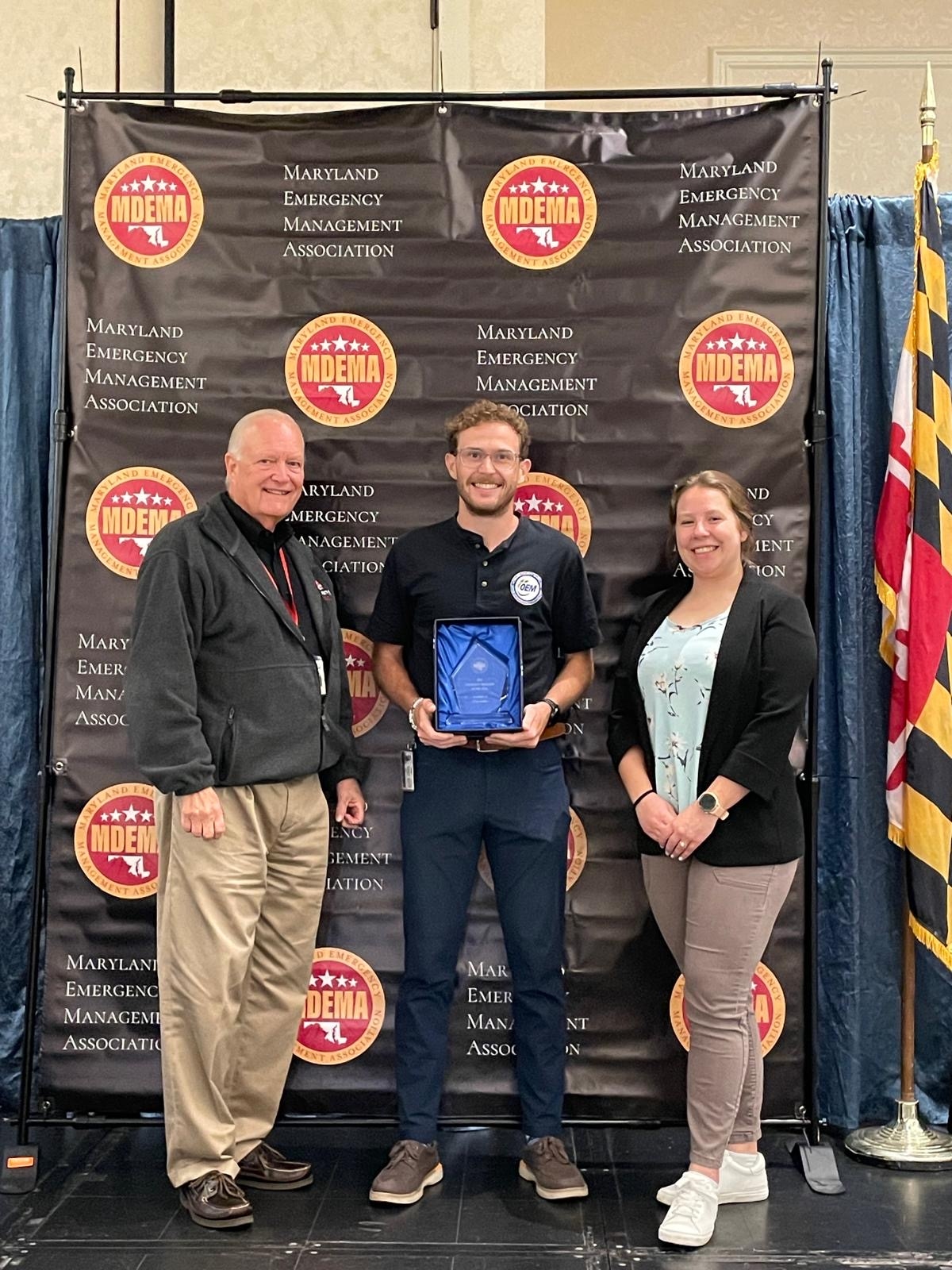
The Maryland Emergency Management Association wishes to acknowledge the many talented professionals who work in the Maryland emergency management community, striving to make this State a safer, better-prepared place to live, work, and do business. The Association wishes to recognize these individuals and projects through the following awards and recognitions:
- Emergency Manager of the Year
- Rookie Emergency Manager of the Year
- Emergency Management Projects of the Year
- Community Project Recognition Award (NEW in 2026)
- Business & Industry Award
- Excellence in Mentoring
- Ed McDonough Excellence in PIO Award
- Best Break-out Session (to be voted on at the conference)
Committee Chair: Taylor Munir
General Eligibility
Recipients do not need to attend the MDEMA conference to be eligible to receive an award, although they are strongly encouraged to participate in the conference. The Awards Committee or judges are not informed about conference registration and do not consider it in decision-making.
Nominees for these awards must not have received an award in their nominated category in the past two years. A nominee does not have to be a member of MDEMA to be nominated for an award; however, their work must benefit the State of Maryland in order to be considered eligible.
Nominees do not need to be nominated by a supervisor or executive leadership member to be considered for an award. We encourage applications from peers and other work associates nominating someone they feel is deserving of recognition!
About the Awards
Maryland is home to a distinguished community of emergency management professionals who demonstrate exceptional commitment, leadership, and service to the safety and resilience of our communities. The Maryland Emergency Management Association is proud to recognize one outstanding individual as the Maryland Emergency Manager of the Year – 2026. This annual award honors a professional who has gone above and beyond in their duties and exemplifies excellence in emergency management. All nominees must have current emergency management experience in Maryland.
Eligibility Criteria:
- Nominees must be currently serving in a State or Local emergency management role within Maryland.
- Nominees must have a minimum of four (4) years of experience in the field of emergency management.
- Nominations must be submitted by another professional in the public safety sector (State or Local level).
- Nominees must not have received an award in this category within the past two years.
Nomination Requirements:
All nominations must include the following:
- Nominee Information:
- Full name of the nominee
- Current title and organization of employment
- Narrative Justification:
A comprehensive description of why the nominee deserves this recognition must be provided. This should include:
-
- Examples of outstanding work, leadership, innovation, or service in emergency management across their career.
- Specific initiatives, programs, or incidents where the nominee played a key role.
- Evidence of measurable outcomes, community impact, or populations served through the nominee’s work.
Please consider not only examples from the previous year, but also examples from across the nominee's whole career.
- Supporting Documentation (Optional):
The Maryland Emergency Management Association is committed to recognizing and fostering the next generation of emergency management professionals. The Maryland Rookie Emergency Manager of the Year – 2026 award honors an emerging leader who has demonstrated exceptional promise, dedication, and impact early in their emergency management career.
This award is open to individuals with less than three (3) years of direct experience in emergency management, who are currently serving in a State or Local emergency management role within Maryland.
Eligibility Criteria:
- Nominees must be currently serving in a State or Local emergency management role within Maryland in a full or part-time capacity.
- Nominees must have fewer than three (3) years of direct emergency management experience.
- Nominations must be submitted by another professional in the public safety sector (State or Local level).
- Nominees must not have received an award in this category within the past two years.
The Association seeks to highlight those who, despite being early in their careers, have already made meaningful contributions to their organizations and the communities they serve.
Nomination Requirements:
All nominations must include the following:
- Nominee Information:
- Full name of the nominee
- Current title and organization of employment
- Narrative Justification:
A comprehensive description of why the nominee deserves this recognition must be provided. This should include:
-
- Examples of outstanding work, leadership, innovation, or service in emergency management during their early career.
- Specific initiatives, programs, or incidents where the nominee played a key role.
- Evidence of measurable outcomes, community impact, or populations served through the nominee’s work.
- Supporting Documentation (Optional):
- Up to two (2) letters of recommendation from colleagues in the public safety or emergency management community may be included to strengthen the nomination.
This prestigious award honors private organizations or companies that have made outstanding contributions to the advancement of emergency management in Maryland. It recognizes those whose efforts have demonstrably improved disaster preparedness, response, recovery, or mitigation in collaboration with State or Local emergency management agencies.
Eligible recipients may include local businesses or private sector partners that have actively supported emergency management activities within their communities. Their contributions must reflect meaningful, sustained, and identifiable support to Local or State government or the broader emergency management field.
Eligibility Criteria:
- Organizations must be actively engaged in supporting emergency management activities within Maryland.
- Contributions may include, but are not limited to: planning, training, exercises, community outreach, donations, logistics support, or innovative partnerships.
- Nominees must have worked directly with a Local or State emergency management agency in Maryland within the past year.
- Nominees must not have received an award in this category within the past two years.
This award highlights the vital role of public-private and nonprofit partnerships in building stronger, safer, and more resilient communities across Maryland.
Nomination Requirements:
All nominations must include the following:
- Nominee Information:
- Provide the name. type (e.g., private sector, nonprofit, 501(c)(3)) and location of the company or organization.
- Briefly describe the organization's mission, core services, and the communities it serves.
- Name of individuals or project(s) within the company or organization that are being recognized
- Partnership Information
- Describe the relationship between the nominated organization and the State or Local emergency management agency/agencies.
- Detail the duration and scope of the collaboration.
- Narrative Justification:
A comprehensive description of why the company or organization deserves this recognition must be provided. This should include:
-
- Provide specific examples of how the organization supported emergency management efforts in Maryland, such as: Disaster preparedness initiatives, Emergency response support (e.g., donations, logistics, services), Recovery or mitigation projects, Community outreach and education, Participation in training, planning, or exercises.
- Evidence of measurable outcomes, community impact, or improvements to local or state-wide emergency management capabilities.
- Highlight any innovative practices, tools, or approaches the organization introduced to enhance emergency management
- Explain how the contributions are sustained over time or have the potential for long-term benefit.
- Testimonials and Supporting Evidence (Optional)
- You may include up to two (2) letters of support from Local or State emergency management officials, public safety professionals, or partner organizations.
- Any additional documentation (photos, media coverage, case studies) may be referenced but should be emailed to the Awards Committee Chairs.
The Maryland Emergency Management Association would like to honor our Maryland community by thanking them for their outstanding contributions to the support and/or advancement of public safety, public health or emergency response/recovery in Maryland. It recognizes those whose efforts have demonstrably improved disaster preparedness, response, recovery, or mitigation in the State of Maryland through the support of our Maryland communities, or State or Local emergency management agencies.
Eligible recipients may include 501(c)(3) nonprofit organizations, other nonprofit community or volunteer organizations, or educational institution projects submitted by students and/or teachers that have actively supported emergency management or emergency response/recovery activities within their communities. Their contributions must reflect meaningful and identifiable support within the State of Maryland.
Eligibility Criteria:
- Organizations or individuals must be actively engaged in supporting emergency management activities within Maryland (such as Public Safety, Public Health, or Emergency response or recovery efforts).
- Contributions may include, but are not limited to: research, planning, community outreach, donations, response and recovery support, or innovative partnerships.
- Nominees must have worked directly on an emergency management issue or incident within the past year.
- Nominees must not have received an award in this category within the past two years.
This award highlights the vital role of community partnerships in building stronger, safer, and more resilient communities across Maryland.
Nomination Requirements:
All nominations must include the following:
- Nominee Information:
- Provide the name. type (e.g., nonprofit, 501(c)(3)), educational institution), and their location within Maryland.
- If you are a community organization, briefly describe the organization's mission, core services, and the communities served.
- Name of individuals and the project(s) that are being recognized
- Partnership Information (if applicable)
If you collaborated with an emergency management agency/agencies:
-
- Describe the relationship between the nominated individuals or organization and any State or Local emergency management agency/agencies.
- Detail the duration and scope of the collaboration.
- Narrative Justification:
A comprehensive description of why these individuals or the community organization deserves this recognition must be provided. This should include:
-
- Provide specific examples of how the organization or individuals supported emergency management or emergency response/recovery efforts in Maryland, such as: Research projects, Disaster preparedness initiatives, Emergency response/recovery support (e.g., donations, logistics support, or other meaningful services), Recovery or mitigation projects, Community outreach and education, Participation in training, planning, or exercises with emergency management agencies.
- Evidence of measurable outcomes, community impact, or improvements to local or state-wide emergency management capabilities.
- If applicable: Highlight any innovative practices, tools, or approaches the organization introduced to enhance emergency management
- If applicable: Explain how the contributions are sustained over time or have the potential for long-term benefit.
- Testimonials and Supporting Evidence (Optional)
- You may include up to two (2) letters of support from Local or State emergency management officials, public safety professionals, or partner organizations.
- Any additional documentation (photos, media coverage, case studies) may be referenced but should be emailed to the Awards Committee Chairs.
The Maryland Emergency Management Projects of the Year Awards recognize exceptional programs led by or carried out under the direction of State or Local emergency management offices in Maryland. These awards honor innovative and effective projects that directly address public safety challenges across the four key mission areas of emergency management: Mitigation, Preparedness, Response, and Recovery.
Award Categories
Mitigation Project of the Year
Recognizes a program that has implemented proactive, long-term strategies to protect lives, property, and infrastructure by reducing or eliminating the risks of future disasters. The selected project should demonstrate the successful application of structural or non-structural mitigation techniques, land use planning, public education, or interagency coordination efforts that significantly increase community resilience. Mitigation strategies can be tailored to address specific hazards, such as flood mitigation or wildfire prevention.
Preparedness Project of the Year
Honors a program that has created an innovative and effective approach to disaster preparedness. Eligible projects may include planning initiatives, legislative frameworks, exercises, community education campaigns, volunteer engagement, or organizational training programs that enhance readiness at the individual, community, or institutional level.
Response Project of the Year
Celebrates a project that exemplified operational excellence during an actual emergency or disaster. The award recognizes programs that demonstrated timely, coordinated, and effective response efforts that minimized harm and restored stability to affected areas. Projects may include multi-agency coordination efforts, emergency communications, incident management, or field operations.
Recovery Project of the Year
Acknowledges a program that made significant contributions to helping communities recover from a disaster or major emergency. Awarded projects may involve funding acquisition, community assistance, housing recovery, economic revitalization, infrastructure rebuilding, or stakeholder collaboration that resulted in a stronger, more sustainable post-disaster recovery process.
Eligibility Criteria:
Eligible projects must either:
- Be completed during the award year, or
- Be of an ongoing nature, with demonstrable, sustained impact and continued operation anticipated in the foreseeable future.
- Nominees must not have received an award in this category within the past two years.
Projects must address a clear public safety issue, demonstrate measurable success, and serve as a model of best practice for other jurisdictions. Award recipients may be invited to present their project during the awards ceremony.
Nomination Requirements:
All nominations must include the following:
- Project Information:
- Provide the name and timeframe (i.e., ongoing or concluded on what date).
- Project Lead(s) and Participants: List the individuals and organizations involved in the planning and execution of the project.
- Narrative Justification:
A comprehensive description of why the project deserves this recognition must be provided. This should include:
-
- Problem/Issue Addressed: Describe the public safety issue the project was designed to solve.
- Project Development and Implementation: Outline the process used to develop and implement the project, including challenges encountered and how they were overcome.
- Outcomes and Impact: Describe the measurable results or benefits achieved. Include data, metrics, or testimonials, where applicable.
- Replicability: Explain how the project could serve as a model or be adapted by other jurisdictions in Maryland (if applicable)
- Funding Source(s): Identify how the project was funded (e.g., grants, local budget, public-private partnership, etc.).
The Excellence in Mentoring Award recognizes an individual who has made a meaningful and lasting impact on the development of emerging emergency management professionals in Maryland. This award honors those who have demonstrated a strong commitment to guiding, supporting, and empowering new emergency managers through mentorship, sharing knowledge, and fostering professional growth.
Through consistent guidance, encouragement, and instruction, the recipient of this award exemplifies the values of leadership, service, and community-building within the emergency management profession.
Eligibility Criteria:
- Nominees must be currently serving in a State or Local emergency management role within Maryland.
- Nominees must demonstrate a sustained commitment to mentoring
- Nominees must demonstrate a significant positive impact on the personal and/or professional growth of mentees through the encouragement of innovation, resilience, and leadership in others.
- Nominees must not have received an award in this category within the past two years.
Nomination Requirements:
All nominations must include the following:
- Nominee Information:
- Full name of the nominee
- Current title and organization of employment
- Narrative Justification:
A comprehensive description of why the nominee deserves this recognition must be provided. Examples include:
-
- How the nominee has mentored or supported new professionals in the field, including information on their mentoring philosophy and/or mentorship style.
- Specific examples of their involvement in emergency management-related activities over their career through programs, initiatives, and projects, and how these examples have impacted others.
- Description of the tangible outcomes of their mentorship on mentees' professional achievements, personal growth, academic success, promotions, confidence-building, etc.
- How they have promoted mentoring best practices among peers or within the organization.
- Supporting Documentation (Optional):
- Up to two letters of support from mentees, colleagues, or supervisors may be submitted to further demonstrate the nominee’s contributions and impact.
In honor of the late Ed McDonough, the Maryland Emergency Management Association has created the Ed McDonough Excellence in PIO Award. Ed has been a constant presence in emergency management both in Maryland and around the country since 2003. We acknowledge his achievements and honor them by presenting this award to an individual who has demonstrated exceptional skill, leadership, and impact in public information and communication in support of emergency management efforts in Maryland.
PIO’s nominated may perform key duties such as media relations, information dissemination, crisis communication, community outreach, information management, communications policy development, and PIO training and support for emergency managers and other public safety personnel.
Eligibility Criteria:
- Nominees must be currently serving in a State or Local emergency management role within Maryland, either as a full-time or part-time employee.
- Nominations must be submitted by a State or Local public safety professional.
- The nominee’s contributions must reflect public information efforts undertaken across the nominee's career.
- All nominees must have current emergency management experience in Maryland.
- Nominees must not have received an award in this category within the past two years.
Nomination Requirements:
All nominations must include the following:
- Nominee Information:
- Full name of the nominee
- Current title and organization of employment
- Narrative Justification:
A comprehensive description of why the nominee deserves this recognition must be provided. This should include:
-
- Examples of outstanding work, service, or participation in public information activities related to emergency management.
- Demonstrated clarity, accuracy, timeliness, and effectiveness in communication during emergencies or public outreach.
- Evidence of leadership, innovation, or collaboration in public information efforts.
- Supporting Documentation (Optional):
- Up to two (2) letters of recommendation from fellow public safety or emergency management professionals may be included to further highlight the nominee’s impact and contributions.
To be voted on at the MDEMA Conference!
The Best Conference Breakout Session Award is given to a highly interactive session that encourages meaningful discussion and provides valuable insights into Emergency Management. Each session will be evaluated in the following areas:
- Innovation: Participants will evaluate the sessions based on their creativity or unique formatting.
- Facilitated Discussion: Participants will evaluate the sessions based on how well they are moderated and how well they foster open dialogue and participation.
- Engagement: Participants will evaluate the sessions based on how consistently they kept attendees actively involved and interested.
- Networking Opportunity: Participants will evaluate the sessions based on how well they facilitated connections among attendees.
Judging Panel Selection
The following is the current Awards evaluation process established by the Awards Committee chairperson(s).
All nominations shall be judged by a diverse panel of volunteers from throughout the State of Maryland. The Committee may ask the MDEMA Board to recommend individuals to serve as judges. The list of panel members includes:
- 1 Local EM representative from each region (5 total)
- 1 MDEM representative
- 1 State Agency representative
- 1 Private Sector representative
If there are no volunteers or not enough to meet the criteria established above, the chairperson(s) of the Awards Committee may request recommendations from the MDEMA Board for the judging panel.
Judging Process
All nominations will be sent simultaneously to each judge so they may independently analyze the nominees and make their preliminary choice(s). Judges who have a conflict-of-interest will be recused from judging that awards category, and an alternate judge will be assigned in their place.
Only documentation submitted through the established submission process will be reviewed. Incomplete entries will not be considered.
After each judge has completed his or her review, the chairperson(s) of the Awards Committee shall collect the scores from each judge and convene the judges to arrive at a unanimous choice.
The judges determine whether to grant an award. The judges may determine that none of the nominees meet the criteria or, if there are no submissions, decide that no award will be granted for the year.
Transparency of the Process
While nominations and publications under consideration are strictly confidential, the Awards rubrics are available upon request to the Awards Committee Chair(s). This allows for nominators to see the criteria the publications and projects will be evaluated on each year. Any questions about how the rubrics are used can be directed to the Awards Committee Chair(s).
Special Considerations
If a nominee has been submitted twice for the same award by different nominators, the chairpersons may, at their discretion, combine the applications into one for the judges to review. This only applies if the application is regarding the same subject, and the applications provide additional clarity to support the nominee's eligibility for the award.
Norming the Rubric
The rotating roster for the Awards Committee necessitates that the rubrics be normed before reviewing each year’s nominations. The purpose of the norming process is not to achieve perfect calibration, but to come to a shared understanding of the rubrics’ language and the group’s interpretation of the rubrics. Each year the committee should approach the rubrics with fresh eyes and not rely on their understanding of its use in previous year(s).
Because the rubrics are available to nominators and will likely guide submission packets, the rubrics cannot be changed during the norming process. There will be an opportunity to modify the rubrics each year post-symposium. If the committee feels that the rubric should be changed, the Chairperson(s) should take detailed notes and revisit them when it is time to consider revising the rubrics.
The norming session will occur each year after the committee members have been determined. The timing is at the discretion of the Chairs and should be informed by the year’s timeline. The outgoing Chair(s) should report recommended rubric items for review, if not already done during their term, to the incoming Chair(s).
For the norming session the Chair can determine how the committee reports scores. This can follow the formal process outlined below (see the Using the Rubric section) or it can be done more informally.
Using the Rubric
Each voting committee member will use the rubric to generate scores for the Awards nominations review. The norming session should guide how each individual interprets the rubrics for that year. Again, do not rely on guessing how the previous year’s committee interpreted the rubric, but use the norming session as the collective determinant of interpretation. As members complete their scoring, they should keep notes to track ambiguities, outliers, and uncertainty when using the rubric. These can help when talking about the nominations with the committee during the selection meeting.
The Chair(s) will provide emails to the committee where the completed rubric should be sent in advance of the selection meeting. Copies of the rubrics for each award category are provided below.
The Chair(s) will be prepared to share the survey data with the committee during the selection meeting. It is advised to do this through screen sharing, not by sharing the rubric results directly with committee members. This adds additional protection to the confidentiality of the process. Downloading the data to Excel or some other manipulable software is advised. This allows the Chair to quickly rearrange the results by nomination during the selection meeting.
Revising the Rubric
During the selection meeting, the committee should determine if the rubrics need to be revised in any way. This can be done through a compilation of notes taken during the norming process and through their use in the selection process. Revisions to the rubrics should be made post-symposium, before the committee is too removed from the process to remember. Revision is not required in any given year and is at the discretion of the Awards Committee. Final approval is contingent upon the Awards Chair(s). Revised rubrics should be added to this Guidebook for the incoming Awards Committee.
Announcement of Awards Results
Once the Awards Committee confirms the award recipient, the Committee Chairperson(s) will present the awards at the MDEMA symposium or at another time established by the MDEMA board members.
Helpful Tips for Writing and Submitting an Application
- Nominees do not need to be nominated by a supervisor or executive leadership member to be considered for an award. We encourage applications from peers and other work associates nominating someone they feel is deserving of recognition.
- Please read the criteria and nomination requirements for an award in full prior to writing an application! The criteria and requirements are how the judging panel will evaluate an application. Missing information will make it more difficult for judges to review an application.
- Letters of recommendation are highly encouraged to support an application and provide more detail about the nominee(s) and their qualifications for the award.
See the example applications here!
Maryland EM of the Year Example
Learn About the Past Award Recipients - View the Award Publications


